Technology, the tail that wags the dog


Mostly due to my education, when I started these blogs, I had thought that technology was a force for good.  In fact, I did not even think that, I just looked to fit into the techno-world that for me was simply the world.

Meanwhile, personal experience and intuitions confirmed/reinforced by readings have turned me into a techno-skeptic.  For example, the idea of gain of function research ought to curb the enthusiasm of any techno-phile.  Technolgy is no longer a means for serving man's needs, but an end onto itself where the man serves as the means.  Surely, my stance  is not enough to save myself, not to say anything about the world.  

In my youth, André Malraux reportedly said about the future, “The twenty-first century will be religious or it will not be at all.”  Surely he did not mean spiritual, as religious is being translated, not only with regard to this quote.  Moreover, Malraux could not have had in mind a secularized form of religion, such as our worship for progress, technology or... green.  

I also think that if we are to be saved, religion has to be  reinstated.  Renewed or, if time permits, anew.


Head Buzz - Is Facebook like Crack?

Via Flickr:

The current issue of Tech Review arrived… and the plaintive plea of Buzz Aldrin is so arresting. Why have we invested in one and not the other?

To be it seems like a surreal disconnect. Innovation is in florid bloom out there, with compounding technologies that warp the very fabric of reality. Big, bold projects to change the world… and beyond. Transportation is becoming electric and fully autonomous. New constellations of low-cost satellites will provide free imagery of every part of the Earth every day. A new wave of industrial and agriculture biotech is upon us as we move beyond cut & paste and freely write the code of life like we program a computer… and the software creates its own hardware. From a few artificial microbes, we can now create billions of novel life forms per day, with all of their DNA spooling from a gene printer. Various breakthroughs in digital non-volatile memory will take us to the post-CMOS era in computing. Humanoid robots will flow into the workforce in 2013 with more powerful AI to follow. Femtosecond lasers can machine materials with zero heat. Quantum computers can now outperform a classical computer by orders of magnitude, and may soon outperform all computers every built for certain optimization calculations and machine learning tasks.

The future is quite bright if you talk to entrepreneurs. The pace of innovation is breathtaking if you talk to scientists, continualy forging the future along the frontiers of the unknown. I hope more investors can look beyond the arbitrage plays rippling throughout the information economy, so easily farmed for their short-term pops, and fleeting sense of bounty. The daily din of opportunism can create a head buzz that crowds out healthier fare.

The pattern of progress comes into focus with a longer-term perspective. We are investing in SpaceX’s trajectory to colonize Mars, to take us where no person has gone before, to venture forth to make humanity a multi-planetary species. And, as I flipped the pages, I was delighted to see that we are investing in almost every “big opportunity” highlighted in the magazine.

Steve Jurveston
_________________


Here's the ensuing conversation:


  • gsikich1 (3 weeks ago)
    Great subtitle on the cover. We have stopped solving big problems and that is because we are distracted by immediate gratification and the quick fix for things that are not fitted for a quick fix. Read Nassim Taleb's new book "Antifragile" and Shiff on the next bubble - no quick fix! Great shots.


  • TheAlieness GiselaGiardino²³ (3 weeks ago)
    Oh sure, in historical terms what's going on now with facebook, etc, in terms of years, or even decades, is like going to pee, or having a nap in the middle of an important activity.
    I think the statement as is (didn't read the whole article) shows not only lot of prejudice but mental myopia. And a quite frightening fundamentalism of thought, on how things should be.
    Things are as they are. Period.
    I would expect from someone who went to the moon to have a really broad and integrating, systemic view on life on Earth, not the other way around. But, that is actually another prejudice. The only difference between mine and Aldrin's is that I realize I am expecting something based on my preconceptions and worldview, whereas Mr. Aldrin seems to think he view is THE view.
    Didn't it happen to occur to Aldrin that Facebook - as the epitome of all this overload of connectivity and seemingly distraction- is necessary to the whole evolutionary progress of humans and science and technology?
    Elon uses the money he made with PayPal to invest in Tesla and Space X...


  • seatonsnet (3 weeks ago)
    Facebook has caused dictators to fall and people to be free. What is there so wonderful about colonies on Mars? Social change is easily as important as technological change and probably at our stage of development, where our technology has far outstripped our talent for living with one another, probably social change and communication are more important right now.


  • vennettaj (3 weeks ago)
    i'm sometimes getting very confused..is it the bright future or it's always the bright past : )
    i read the other day the article..what you posted on fb..not sure if the same...about political reaons behind the distribution..the ways hunger comes about...the technological solutions being somewhat superficial on that.. and that "we often plain don't know what the problem is.. yeah..interesting
    somebody actually can see the whole picture? really?..
    Gi, agree..but that's the pioneer's spirit i think..the down side of it :-)


  • ukweli (3 weeks ago)
    I think the disconnect is excitement about "how" versus understanding about "why" basically. Does colonizing mars on any real scale satisfy any reasonable "why?"
    I really don't have a lot of respect for the opinions of an astronaut about general progress. These are the men and women who rode on the tip of hundreds of billions of non-competing dollars. Public will had nearly nothing to do with the moon landing, and I predict the same will be true with the Mars landing.
    Eh, Alieness said it better.


  • scleroplex (3 weeks ago)
    the whole point of facebook now is delivering individual tracking data.....
    marketing is the world's ultimate goal now.


  • BillS49 (3 weeks ago)
    Thank you for being willing to back dreams of where mankind can go.


    subarcticmike (3 weeks ago)
    today's robot-led exploration / prelude may be the calm before the next storming of the solar system


  • sion1231 (3 weeks ago)
    It is true, the present is incredibly exciting. Thanks to people like Elon Musk and others the possibilities of the present are starting to be realized. I don't know about Facebook but Google at any rate revolutionized the revolution that is the internet. Here I am inspired by people like Elon Musk and commenting on the photo stream of someone significant who I would never have even heard of if it weren't for the internet. I am just one of thousands if not millions who may be able to make a small difference influenced by truly exceptional role models. In aggregate the effect is very likely to be phenomenal. We can choose our Hero's now. Before they were chosen for us.


  • -fCh- (3 weeks ago)
    "Facebook has caused dictators to fall and people to be free."
    On Mars, perhaps.


  • RRNeal (3 weeks ago)
    "The daily din of opportunism can create a head buzz that crowds out healthier fare." Indeed. Well stated.


  • Jim Rees (3 weeks ago)
    Where's my jetpack? Flying car? Moving sidewalks? Pushbutton kitchen? Dog-walking robot? Those are the things I was promised.


  • TheAlieness GiselaGiardino²³ (3 weeks ago)
     Exactly.
    Speaking of which... I was promised the Playmobile's Pirateship and never got it. I know it's not the same kind of promise, but still feels frustrating. And I am not in the cover of a magazine complaining.
    I came to terms with it.


  • andyi (3 weeks ago)
    Well, also a palm-sized device that can correctly navigate you from wherever you are to the doorstep of the nearest emergency room, wherever that is, showing you aerial color imagery of every meter of the route.
    I mean, it hasn't been a complete wash, Buzz. Also, have you played "Orbital"? It's cool beans, seriously.


  • jgury (3 days ago)
  • So I guess you are not swayed by more Mars colonies less crime arguments. If the film versions are correct we get more crime, dictators and social injustice along with more Mars colonies. But we do not have any historical basis for that as a social science observation unlike my discovery of the more Mosques less crime effect. That was in fact key to saving civilization from that difficult era of Mongol and barbarian lawlessness and social disruption. Of course they did not have the relatively low technology of firearms so any opposing militias were easily dealt with, one more thing which our founding fathers had the wisdom to make sure would not be an issue for us.

    -fCh- (3 days ago)

  • Palm-size this and that are the equivalent of pocket watches as consolation prize for not discovering/colonizing the Americas...


  • ________________________


    Encyclopaedia Britannica: Sad, yes. Nostalgic, yes. Inevitable, yes.

    Encyclopaedia Britannica

    In another turn of digital fate, NYTimes reads the following about Encyclopaedia Britannica:
    After 244 years, the Encyclopaedia Britannica is going out of print. In an acknowledgment of the realities of the digital age — and of competition from the Web site Wikipedia — Encyclopaedia Britannica will focus primarily on its online encyclopedias and educational curriculum for schools. The Britannica, the oldest continuously published encyclopedia in the English language, has become a luxury item with a $1,395 price tag. It is frequently bought by embassies, libraries and research institutions, and by well-educated, upscale consumers who felt an attachment to the set of bound volumes. Only 8,000 sets of the 2010 edition have been sold, and the remaining 4,000 have been stored in a warehouse until they are bought.
    The NYTimes readers say:

    Old Encyclopedias
    Steve FankuchenOakland, CA
    This article makes a truly dubious statement: "...Wikipedia, which in 11 years has helped replace the authority of experts with the wisdom of the crowds." In many instances it would be more accurate to reverse the uses of "authority" and "wisdom" saying, instead, "...Wikipedia, which in 11 years has helped replace the wisdom of experts with the authority of the crowds."

    While in some cases Wikipedia works quite nicely, in many others it is simply another expression of the increasingly common reality of confusing opinion with news.

    In any case, "voting"/crowd sourcing does not establish accuracy, especially if the subject is conceptual. It is democracy as religion, so to speak.

    The Britannica was like the three networks: though bland and middle-of-the road, they were at least accountable, vetted for a concept of accuracy, and provided a common reality/interpretation with which people could agree, disagree, and constructively argue about, thereby improving our collective level of understanding.


    JenofNJNJ
    Sorry, but I do not consider OpinionPedia to be a substitute for an authoritative encyclopedia. Too much junk on it, as well as gaming the system. Call me old-fashioned; I like *reference* books.


    Ralph P.New York
    My mother bought a set of the Encyclopedia Britannica just before I started high school. We didn't have a lot of money, and this was a huge sacrifice for the family. At the same time, she also got rid of the only television set we had in the house. With nothing else to do, I started reading the encyclopedia, letting a subject lead me into another, until I eventually got through most of the volumes. Soon, I was reading the classics and checking out books from the library. I developed an appetite for reading. I succeeded in high school and got into the university of my choice. I think Britannica had a lot to do with it.


    Ricky BarnacleSeaside
    I always wanted a set for myself as a kid but we couldn't afford it.

    My grandmother had a set from the 1940's and when Mom and Dad dropped off the kids for the Saturday babysitting routine, I'd pull out a random letter, curl up on a chair in Grandma's living room and stay up late reading, looking at the photos and basically dreaming about all the fantastic people, places and things on this planet.

    All of the other kids were in watching TV -- not me, I loved those books! And they taught me plenty. Sorry to see them go.

    Optics - Encyclopedia Britannica 1771 a

    Optics - Encyclopedia Britannica 1771 a

    Illustration of Optics theory.
    Copperplate engraving from the First Edition of the Encyclopedia Britannica, or Dictionary of the Arts and Sciences, founded in 1768 and printed in 1771. 3 Volumes, this is Volume 3.

    The largest encyclopedia of general knowledge published to date, with contributions by leaders in their fields.
    Printed for Bell and Macfarquhar, Edinburgh. Original half leather binding, 970 pages this volume. 26cm x 21cm.

    westiePhiladelphia, PA
    We also own a 1960 version... It is FAR superior to any current information on such things as Cleopatra, Hammurabi's code, Alfred Nobel, etc, etc..... anything that took place a long time ago has an exhaustive article that is unmatched!!!!!


    BeliavskyBoston, MA
    I used to browse the World Book encyclopedia as a kid. I think print versions of sets of encyclopedias that are a few years old are worth buying used for $100 or so. Kids and adults may browse them more than the online version.

    Britannica
    From a reproduction first edition of the Encyclopedia Britannica for the utata reader weekend project 

    DanYHKimLas Cruces, NM
    I listened to a very interesting podcast of Simon Winchester talking about the history of the Oxford English Dictionary. In it, he described the way in which data was collected for the first edition of the dictionary: lay contributors from the entire English speaking world were asked to write any word they saw in print, along with a definition, pronunciation guide and a citation of the written work containing the word in context. These were to be mailed to England, to be sorted and compiled into the Dictionary.

    So, the use of contributions by ordinary people in an archetypal reference work has a long and honorable history. The OED is, in fact, the progenitor of today's Wikipedia!


    LJ EvansEasthampton, MA
    You clearly have no idea what peer review is about, or you would never say such a ridiculous thing. ANYONE can edit a Wikipedia article, whether they know diddly about a subject or not. Peer review is the submission of a proposed piece of scholarship to actual experts and fact checkers. They are not even vaguely similar.


    PaulAtlanta
    It's more than about accuracy. Wikipedia articles are often poorly written, and some are downright excruciating--newsy, promotional, way too many words or too few--despite the good work of an obviously insufficient band of roving editors. This matters, because comprehension depends on communication. Too often, the "crowds" can't write.


    Encyclopedia Britannica 1771 - Mechanics c

    Encyclopedia Britannica 1771 - Mechanics c

    Engraving of mechanical devices from the first edition of the Encyclopedia Britannica, or Dictionary of the Arts and Sciences, founded in 1768 and printed in 1771. 3 Volumes, this is Volume 3.
    The largest encyclopedia of general knowledge published to date, with contributions by leaders in their fields.
    Printed for Bell and Macfarquhar, Edinburgh. Original half leather binding, 970 pages this volume. 26cm x 21cm.


    Ross WilliamsGrand Rapids, Minnesota
    Every source has its problems. There have been studies showing that Wikipedia actually has fewer errors than the print versions of the Encyclopedia Britannica. Largely because errors in an online, crowd sourced encyclopedia get corrected.

    Crowd sourcing does not guarantee accuracy, but then neither does one expert opinion. You can certainly find obscure and/or controversial topics where the Wikipedia entry is suspect. But Encyclopedias only avoided that problem by avoiding the topics all together or focusing only on one narrow, non-controversial narrative. That may be reassuring for those looking for "authority", but it does not make for a very complete source of information.


    SherieNV
    This decision is a disaster for the future. One of my treasures is a set of the 11th edition of the Britannica. Published in 1911, it has always had the reputation of being the best reference to go to for historical events and people up to that date. Long after many versions of web pages can no longer be read, my children's children will be able to sit down with that set and find out what made the world tick in the 19th century and in centuries before that.


    RalphSan Francisco
    Sad, yes. Nostalgic, yes. Inevitable, yes.


    georgesanders---
    Which of course would be trumped a millionfold by the errors found in Wikipedia. Every day millions of people world-wide are adding mistakes, fiction, rumor, and b.s. to Wikipedia. Much of this gets filtered out eventually (and more added!), but one can never be certain at any given time what is accurate and what not."In the long run" truth will out is the refrain of the Wikipedians, but as Keynes noted, in the long run we are all dead. In the meantime, it is unreliable.


    MikeAustin, Tx
    Wikipedia follows a process similar to the highest standard in publication: peer review. The EB may have survived if they invited more authorities to review their work and expand the number of articles.

    Just to rub their face in it, the Wikipedians compiled the following error list:
    http://en.wikipedia.org/wiki/Wikipedia:Errors_in_the_Encyclopædia_Britannica_that_have_been_corrected_in_Wikipedia#Wikipedia

    The Internet is becoming the town square for the global village of tomorrow.  --- Bill Gates

    The Internet is becoming the town square for the global village of tomorrow. --- Bill Gates


    georgesanders---
    "Peer review" in the academic profession assumes that the peers are experts. "Peer review" in Wikipedia involves the contributions of many people who know next to nothing about any given subject, often can't write, and rarely have any sense of what distinguishes reliable information from empty opinion.

    Wikipedia serves well as a means of doing a quick check on basic information (to be double-checked elsewhere) and a starting point for research (now that bibliographies are increasingly included). But the reliable information that appears in Wikipedia is almost completely parasitic on the work of real scholars bound by professional standards.

    In addition, the gatekeepers Wikipedia uses often are ignorant of the subjects they are supposed to be supervising and are not bound by the sorts of professional rules one finds in the university system. I discovered one of these gatekeepers insisting that references other Wikipedia entries were considered more reliable as a measure of any composer's professional standing than a references to real-world sources. I tried in vain to get this person to understand that performances of a composer's work by leading ensembles, or a prize granted a composer by one of the leading institutions in the world of music were real-world measures of professional standing. For him, all that counted was Wiki-world standing.

    So, no, I do not consider Wikipedia "open-sourcing" to constitute anything remotely resembling peer review.

    day ten. this might make me weird but I read the Encyclopedia for fun.*

    "...this might make me weird but 

    I read the Encyclopedia for fun."


    doy1NYC
    There's nothing like randomly leafing through an encyclopedia and discovering an entire subject that was previously unknown - delving into this subject - then being led to related subjects and ultimately, other sources.

    It begins with knowledge for the sake of knowledge - stimulating a thirst for more, whether expanding on a subject or narrowing down the search for more detail. This truly opens one's mind and imagination.

    Who searches randomly through the internet? The adventure of leafing through print reference books just can't be replicated via the internet.

    My parents made the considerable financial sacrifice to purchase the EB when I was a child - NOT in an attempt to gain "status" (which would have been more easily attained by buying a new car) - but to open their children's minds and give us access to the whole world at our fingertips at any time. As a result, our apt. was a magnet for the entire neighborhood - & a place of lively discussion & debate.

    So sad that children won't have that experience anymore. Yes, I'm grateful that the online version of EB will continue - glad that it will still provide authoritative, accurate information - but it's just not the same.


    RobertBoston, MA
    When I was introduced to online researching back in 1983 (!) the librarian who helmed the class told us that the great sorrow of computerized searching would be the loss of serendipity -- the accidental discovery of new worlds on the way to the one you wanted. That is the great value in the physical EB volumes that will be missed. What greater joy than finding something completely new on the way to something that you already knew existed. WP, of course, tries to recreate the experience with its homepage "Featured article" and "Did you know..." bits. However, it's not the same as the joy of losing yourself in wonder within the entry _before_ the one you meant to find. Most of the young people whom I know in the Google generation have no clue about that type of immersive learning-for-the-joy-of-knowing. They certainly won't get it from WP or Google searches. Everyone in our household has a computer with a connection or a smart phone. We use them. However, to shore up the bulwarks of civilization, we still haul out our '72 EB to the dinner table when questions of history, etymology, or plant biology arise. Out of date? Sure. Worth the ride? Always.


    SteveJayNew York
    So fix the Wiki entries. That's what crowd-sourcing is all about.


    Steven McGeadyPortland, OR

    This story conflates two trends, one important and inevitable, and one less so.

    The death of the printed encyclopedia is long in coming. Shipping, storing, and using a 32-volume set of books that need to be regularly updated is not economically viable, nor is it the best way (or the only best way) to access reference information. The death of the printed encyclopedia is part and parcel of the dramatic changes wrenching the whole publishing industry.

    The view that Wikipedia is the worthy successor, however, is misbegotten. On any given topic and at any given moment, Wikipedia is likely to contain thousands of howlingly incorrect statements masquerading as facts, and thousands of biased, inaccurate, or incomplete articles masquerading as knowledge. Many of them are even properly sourced, to primary sources themselves boneheaded or bent.

    Wikipedia lacks expert voices. Britannica had 4000 authors? That is probably more than are truly active on Wikipedia, and each of Britannica's 4000 are experts. As someone said "Twenty teen-age idiots plus one expert are indistinguishable from twenty-one idiots."

    Wikipedia may be a useful tool for determining the cast list from "Gilligan's Island" or the attributes of a particular Pokemon, but as an encyclopedia it is meretricious, an attractive hazard to scholars young and old.


    Wikipedia is not dying
    Wikipedia's founder Jimbo Wales at the closing ceremony of Wikimania 2011 in Haifa, Israel. Since in the days before some newspapers wrote that Wikipedia was dying he felt he had to make clear that wasn't true 

    Google(+/-)Happenings

    Jim Whittaker, a Microsoft employee, formerly with Google, shows how the nexus of money, technology, and do no evil is being transformed.  Apparently, the prosperity of facebook is breaking it, for Google, that is.


    Google, Then and Now


    I should probably add that I have no facebook account, and I have Google+, yet things don't seem to fall into place.

    Fate of the US company: Cycle of renewal vs. Pile of patents

    Kodak Still Life

    Eastman Kodak, the 131-year-old film pioneer that has been struggling for years to adapt to an increasingly digital world, filed for bankruptcy protection early on Thursday.


    The American legend had tried a number of turnaround strategies and cost-cutting efforts in recent years, but the company — which since 2004 has reported only one full year of profit — ran short of cash.


    First came foreign competitors, notably Fujifilm of Japan, which undercut Kodak’s prices. Then the onset of digital photography eroded demand for traditional film, squeezing Kodak’s business so much that in 2003 the company said that it would halt investing in its longtime product.


    “Kodak is taking a significant step toward enabling our enterprise to complete its transformation,” Antonio M. Perez, the company’s chief executive, said in a news release. “At the same time as we have created our digital business, we have also already effectively exited certain traditional operations, closing 13 manufacturing plants and 130 processing labs, and reducing our workforce by 47,000 since 2003. Now we must complete the transformation by further addressing our cost structure and effectively monetizing non-core I.P. assets.”


    Under Mr. Perez, who joined Kodak from Hewlett-Packard in 2003, the company has bet on inkjet printers. That strategy has yet to bear fruit, however. (NYTimes)

    ToddA Michigan
    I grew up in Rochester in a Kodak family. We bled yellow. I worked two summers at Kodak, in the factory where they made the ill-considered instant print film that went away when they lost the patent suit with Polaroid.

    Kodak has been ill-managed for years, lacking leadership with a real passion for making great products and a stomach for taking the risks necessary to stay out in front. R&D was Kodak's life blood and has been gutted by the current crew, who have reduced this giant of innovation to hawking its old ideas for a few spare nickels with which to slow its demise. The great minds at the firm have been wasted, have left in disgust, or both.

    Why, oh why, has Kodak continued to ride this fool of a CEO, Perez? He took a sick company, changed its focus completely to a non-core business, lobotomized it, and then moved on to selling off the extremities and internal organs. Did the Board really think this was a winning strategy?!?

    I am appalled by what they have done to this brilliant company. Kodak needs a leader with the passion and determination of Steve Jobs to bring it back from the brink. The current Gil Amelio-esque bunch is utterly and completely incapable of completing the task ahead. They all need to go. Every darn last one of them.


    mancuroc Rochester, NY
    Kodak's recipe for decline parallels that of all too many companies too many MBAs and too many corporate lawyers running things, and not enough visionaries and technical people - this, no less, from the company that pioneered digital imaging.

    It's hard to see a silver lining in bankruptcy, but if there is one, it is that the company luckily failed find a buyer for the intellectual property it foolishly tried to sell to raise money. Once you sell it, it's gone for ever; if the company survives, it will be there to license as a source of income.

    If you live and breathe only by the bottom line, you die by the bottom line. There's a lesson here for American voters: beware of electing as President a bean counter whoy lacks imagination.


    C. Attucks New York
    Kodak could not bring to market fast enough the electronic image capture and display products they needed to produce in order to successfully compete with smaller electronic companies. Although they had the capital to dominate the digital evolution, management was reluctant to fully commit to the technology.

    Many consumers are not aware that Kodak was a very successful world-wide chemical company that made chemicals for other industries besides photography. They should have kept the Eastman Chemical Division in Kingsport, Tennessee (EMN stock price as of today is $46.48) as part of a balanced portfolio. But the executive boardroom kept making decisions that addressed short term stock price concerns (e.g., Johnson & Johnson poison pill acquisition) instead of focusing on core business growth. They created a world-class health, safety and environmental program after several highly publicized chemical contamination spills and could have remained a viable chemical company since the infrastructure is still in place.


    Steve Englewood Beach, FL
    Kodak invented the Digital Camera, then, sat on it for 20 years. Pathetic leadership, zero vision, I feel for the Employees, past & present.


    Josh Hill Connecticut
    Sad. I can't think of a better example of a company that squandered its lead in new technology because of dinosaur management that was wedded to the old, dying business. Well, maybe one -- Western Union famously turned away Alexander Graham Bell.

    I know a former Eastman employee who speaks with despair of management's failure to recognize what they had in the first megapixel CCD. And I don't have the impression that current management is any better -- ink jet printers, indeed.


    LucS Manhattan
    Kodak was not only a pioneer Film company, Kodak was also the pioneer in all forms of Digital Imaging, including the first commercial digital cameras. The birth of Digital Photography was a quandary for Kodak, as the company's cash cow were the consumables (film and paper and chemistry). I was fortunate to be on the launch team of the very first digital camera when Kodak was still one the greatest American if not International companies/corporations. They were even among the Major sponsors of all Olympic events.

    The reason I left Kodak in the mid 1990's is the same reason Kodak is filing for Bankruptcy today. Even though it had been an innovative technology company, its outlook was provincial, and its reach slowed down by a stodgy corporate culture with its roots in the 19th Century.

    Despite the excitement of many of us back then at the arrival of Digital, we were also apprehensive of its effect on revenues from silver halide products and would even joke about which one of us would turn the lights off. The days of mass manufacturing of film are numbered. It simply does not make business sense to keep huge factories running to sell only small batches. Film is the darling of young photography enthusiasts because it is different. We would even joke back then that if Digital was first, people would be Wow'ed by the invention of film. And even if film manufacturing was still feasible, the Lab infrastructure is no longer there to support it.

    The End Indeed.


    dr MA
    Clearly, OLEDs are the next big imaging technology, and Kodak should be pushing their position there. But unfortunately, they sold the technology to LG a few years ago.

    Kodak

    Economic future & Patent law

    Patent Law
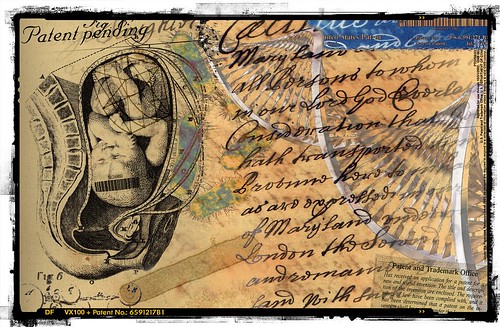
    America Invents Act is latest bill in the US patent law system, aimed more at defending entrenched economic interests rather than anything else. The bill changes the method for determining the priority of patent applications to a “first to file” system from the long-standing “first to invent” method.

    According to the NYTimes, the major two views about this bill are:

    • “This bill is unequivocally a job killer,” said Valerie S. Gaydos, a Baltimore-based investor in early-stage companies. “It will create a rush to the patent office, with innovators seeking to file anything and everything. The applications will be less complete, less well written and it will create more of a backlog.”
    vs.
    • David S. Kappos, the patent office director and under secretary of commerce for intellectual property, disagreed, saying that the first-to-invent system was flawed because it essentially granted an inventor the right to legally defend his contention that he came up with an idea first. By changing to a first-to-file system, which is used in nearly every other country around the world, priority is clearly established, he said.
      Many large corporations — like General Electric, Caterpillar and I.B.M. — supported the bill, which opponents suggested was evidence that the bill favors behemoths at the expense of the little guy. They point out that Mr. Kappos worked at I.B.M. for 27 years before taking the patent office job. 
    Here are some public views  on the matter:


    Anon
    Boston

    The Framers - at the urging of the Paris-based Thomas Jefferson - gave Congress the power "To promote the Progress of Science and useful Arts, by securing for limited Times to Authors and Inventors the exclusive Right to their respective Writings and Discoveries" (Art I Sec. 8). The idea was clearly to encourage individual innovators to commercialize their ideas, reap the rewards of their ingenuity, and teach others their inventions so they might be improved upon. But most of all, the hope was to bring the benefits of invention to the public, to agriculture and to industry. The cotton gin, the McCormack reaper, the telegraph, the electric lightbulb, and countless other inventions benefited both their inventors and the public in this way.

    The patent system has degenerated into a big money corporate game. Most utility patents are trivial improvements on existing technologies, and rarely encompass the whole of the value of the product: a smartphone may incorporate hundreds of patented ideas. Patents are often issued on ideas that are already in the public domain, and it is extremely difficult to overturn an issued patent. Despite the high cost of prosecuting a patent, companies like Motorola, Apple and Microsoft file thousands of them each year, almost indiscriminately. The inventors get a modest award for each filing and a second if the patent is granted. And rather than being an incentive to innovation, they are trading cards in litigation.

    Worse still, patents get abused by non-practicing patent holders (who often buy them cheaply) for barefaced extortion schemes that create no economic value and only serve to raise the price of technology products to consumers or keep valuable products off the market. The patent portfolio of the failed Nortel Networks had more value in bankruptcy than all the other assets of the company combined, in a cynical bidding war.

    Jefferson must be spinning in his grave.

    Law Books
    Court of Customs and Patent Appeals Reports (Patent Cases) in a large DC law library.


    Lafayette75
    Paris

    Be careful, folks, anything that tends to bigness also arrives at awfullness in America. It is an ineluctable destination in an America gone crazy over Bigness is Beautiful.

    What market bigness does is this: It creates oligopolies where too many customers go chasing too few suppliers. This is already happening to the Interconnect Industry, which is why DSL-interconnect is so much more expensive than elsewhere.

    Which means what? My take: It means that our right to interconnect is not universal but based upon companies cherrypicking markets according to the number of cherries the market will produce.

    Which means inevitably that some people will have to go without, sooner or later. It is one of the reasons why rural Internet Interconnect is lagging in the US. I live a very tiny village in the boonies of France, and yet my interconnect cost is only $20 a month.

    Why? Because the government decided that citizens had the right to be informed (by TV, Telecom, Telephony) and that right should come at the lowest possible cost. Beyond that, whatever content they wanted could be priced at whatever the market will bear.

    This notion is lost in America, which takes pride in Large Numbers bounced around the media, reported in the NYT, that makes mouths water.

    What a bunch of children. Money can't buy you happiness, but it should be able to buy you a decently priced interconnect ISP.


    Patent reform bills with little reform

    RAPIER
    CITY OF ANGELS

    It's really boils down to control and domination. The realm of patent abuse has gone off the charts. Patents are being used by too big corps to dominate and control large marketplaces and LIMIT choices and increase costs to consumers thereby increasing their profits. Frenzied patent activity is occurring in every market; genetically modified food (and seeds), bio-med, etc. It's just another method to noose consumers with technology.

    Farmers can't get a pineapple seed without buying a patented one from a giant Japanese firm because they GMOed it so now they own all the pineapple seeds.

    Most of these corps don't create anything new. They just suck up other entrepreneurs' and inventors' ideas or products and/or steal them. A smaller entity or an individual has no chance to fight them in court. What are these patent vampires really producing that is truly beneficial to society at large? Drone jobs? Disposable technology to contaminate the planet further? Too rich executives? Contributing to an elite economic class and destroying the middle class? What is their true value to western civilization beyond Wall Street money changing and fostering a trend towards corporate state fascism?

    Recently, congress was attempting to 'reform' the patent office filing from who had the idea first to who files first. Mammoth corporations employ mammoth law firms to do all that legwork. Tesla died poverty stricken. JP MORGAN bought or stole his ideas.

    _______________


    Patent Law


    So, the present seems to favor a future characterized by economic monstrosities, also known, gingerly,  as too big to fail.

    The mind as lens into the future


    Vannevar Bush
    Originally uploaded by UltimateLibrarian
    Vannevar Bush, dean of engineering at M.I.T., in The Atlantic, July 1945:

    Consider a future device for individual use, which is a sort of mechanized private file and library. It needs a name, and, to coin one at random, "memex" will do. A memex is a device in which an individual stores all his books, records, and communications, and which is mechanized so that it may be consulted with exceeding speed and flexibility. It is an enlarged intimate supplement to his memory. It consists of a desk, and while it can presumably be operated from a distance, it is primarily the piece of furniture at which he works. On the top are slanting translucent screens, on which material can be projected for convenient reading. There is a keyboard, and sets of buttons and levers. Otherwise it looks like an ordinary desk.

    In one end is the stored material. The matter of bulk is well taken care of by improved microfilm. Only a small part of the interior of the memex is devoted to storage, the rest to mechanism. Yet if the user inserted 5000 pages of material a day it would take him hundreds of years to fill the repository, so he can be profligate and enter material freely.

    Lead time to another harvest...

    I've been arguing on different forums that people got addicted to the late '90s returns on hi-tech innovation, without understanding that they were harvesting the fruits whose seeds were planted for ~45 years (read, investments in fundamental science and such). In a recent exchange on LinkedIn, the following link came up.


    Right now, we can see that innovation still goes on in the Military and bio-sciences. Indeed, it's due to the big money spent on these.

    From Siprnet to Cablegate: An information system gone wrong

    SIPRNet is an acronym that stands for Secret Internet Protocol Router Network. SIPRNet is "a system of interconnected computer networks used by the United States Department of Defense and the U.S. Department of State to transmit classified information (up to and including information classified SECRET) by packet switching over the TCP/IP protocols in a 'completely secure' environment." It came into being in the aftermath of 9/11, as a way to share information easily among the many government employees, with the objective, or hope, that key intelligence no longer gets obscured in information silos or "stovepipes."

    SIPRNet is an information system, or a combination of people and technology. The whole Cablegate episode becomes also interesting from the perspective of our confidence in, and expectations from, technology. One should only recall the early rhetoric surrounding internet technology, which probably made its way also to/from the State Department.

    Now, we are waiting again for technology to save us from peak-oil.

    In all these instances, I ask, where have the investments been? Not in people, it appears...

    ideas in motion: covering mirrors

    Question

    Without following the finer points bibliophiles make in reaction to e-book readers, how closely and how soon will the book industry resemble the music and film industries? 

    A hard disk drive back in 1956... with 5 MB of storage

    In September 1956 IBM launched the 305 RAMAC, the first 'SUPER' computer with a hard disk drive (HDD). The HDD weighed over a ton and stored a 'whopping' 5 MB of data. Do you appreciate your 8 GB memory stick a little more now?

    deconstructing the iphone

    Globalization is apace, despite increasing awareness to negative externalities, jobs displacement and higher costs. In 2006, it was Sonicare, now is iPhone. Some things never change, they keep mutating at the edges.

    Swan Song?


    Microsoft’s Creative Destruction
    By DICK BRASS


    AS they marvel at Apple’s new iPad tablet computer, the technorati seem to be focusing on where this leaves Amazon’s popular e-book business. But the much more important question is why Microsoft, America’s most famous and prosperous technology company, no longer brings us the future, whether it’s tablet computers like the iPad, e-books like Amazon’s Kindle, smartphones like the BlackBerry and iPhone, search engines like Google, digital music systems like iPod and iTunes or popular Web services like Facebook and Twitter.

    Some people take joy in Microsoft’s struggles, as the popular view in recent years paints the company as an unrepentant intentional monopolist. Good riddance if it fails. But those of us who worked there know it differently. At worst, you can say it’s a highly repentant, largely accidental monopolist. It employs thousands of the smartest, most capable engineers in the world. More than any other firm, it made using computers both ubiquitous and affordable. Microsoft’s Windows operating system and Office applications suite still utterly rule their markets.

    The company’s chief executive, Steve Ballmer, has continued to deliver huge profits. They totaled well over $100 billion in the past 10 years alone and help sustain the economies of Seattle, Washington State and the nation as a whole. Its founder, Bill Gates, is not only the most generous philanthropist in history, but has also inspired thousands of his employees to give generously themselves. No one in his right mind should wish Microsoft failure.

    And yet it is failing, even as it reports record earnings. As the fellow who tried (and largely failed) to make tablet PCs and e-books happen at Microsoft a decade ago, I could say this is because the company placed too much faith in people like me. But the decline is so broad and so striking that it would be presumptuous of me to take responsibility for it.

    Microsoft has become a clumsy, uncompetitive innovator. Its products are lampooned, often unfairly but sometimes with good reason. Its image has never recovered from the antitrust prosecution of the 1990s. Its marketing has been inept for years; remember the 2008 ad in which Bill Gates was somehow persuaded to literally wiggle his behind at the camera?

    While Apple continues to gain market share in many products, Microsoft has lost share in Web browsers, high-end laptops and smartphones. Despite billions in investment, its Xbox line is still at best an equal contender in the game console business. It first ignored and then stumbled in personal music players until that business was locked up by Apple.

    Microsoft’s huge profits — $6.7 billion for the past quarter — come almost entirely from Windows and Office programs first developed decades ago. Like G.M. with its trucks and S.U.V.’s, Microsoft can’t count on these venerable products to sustain it forever. Perhaps worst of all, Microsoft is no longer considered the cool or cutting-edge place to work. There has been a steady exit of its best and brightest.

    What happened? Unlike other companies, Microsoft never developed a true system for innovation. Some of my former colleagues argue that it actually developed a system to thwart innovation. Despite having one of the largest and best corporate laboratories in the world, and the luxury of not one but three chief technology officers, the company routinely manages to frustrate the efforts of its visionary thinkers.

    For example, early in my tenure, our group of very clever graphics experts invented a way to display text on screen called ClearType. It worked by using the color dots of liquid crystal displays to make type much more readable on the screen. Although we built it to help sell e-books, it gave Microsoft a huge potential advantage for every device with a screen. But it also annoyed other Microsoft groups that felt threatened by our success.

    Engineers in the Windows group falsely claimed it made the display go haywire when certain colors were used. The head of Office products said it was fuzzy and gave him headaches. The vice president for pocket devices was blunter: he’d support ClearType and use it, but only if I transferred the program and the programmers to his control. As a result, even though it received much public praise, internal promotion and patents, a decade passed before a fully operational version of ClearType finally made it into Windows.

    Another example: When we were building the tablet PC in 2001, the vice president in charge of Office at the time decided he didn’t like the concept. The tablet required a stylus, and he much preferred keyboards to pens and thought our efforts doomed. To guarantee they were, he refused to modify the popular Office applications to work properly with the tablet. So if you wanted to enter a number into a spreadsheet or correct a word in an e-mail message, you had to write it in a special pop-up box, which then transferred the information to Office. Annoying, clumsy and slow.

    So once again, even though our tablet had the enthusiastic support of top management and had cost hundreds of millions to develop, it was essentially allowed to be sabotaged. To this day, you still can’t use Office directly on a Tablet PC. And despite the certainty that an Apple tablet was coming this year, the tablet group at Microsoft was eliminated.

    Not everything that has gone wrong at Microsoft is due to internecine warfare. Part of the problem is a historic preference to develop (highly profitable) software without undertaking (highly risky) hardware. This made economic sense when the company was founded in 1975, but now makes it far more difficult to create tightly integrated, beautifully designed products like an iPhone or TiVo. And, yes, part of the problem has been an understandable caution in the wake of the antitrust settlement. Timing has also been poor — too soon on Web TV, too late on iPods.

    Internal competition is common at great companies. It can be wisely encouraged to force ideas to compete. The problem comes when the competition becomes uncontrolled and destructive. At Microsoft, it has created a dysfunctional corporate culture in which the big established groups are allowed to prey upon emerging teams, belittle their efforts, compete unfairly against them for resources, and over time hector them out of existence. It’s not an accident that almost all the executives in charge of Microsoft’s music, e-books, phone, online, search and tablet efforts over the past decade have left.

    As a result, while the company has had a truly amazing past and an enviably prosperous present, unless it regains its creative spark, it’s an open question whether it has much of a future.

    Dick Brass was a vice president at Microsoft from 1997 to 2004.

    tis hurtin'


    Stayin' alive long enough can show one that the stronger some views were held to more ironic they seem now. Case in point, the Mini-Microsoft Blog and its author who goes by the name of Mini. A few years back, a smart and differently outspoken Microsoft employee--read, anonymous yet very publicized--decided to create a blog whose mission can still be read on the frontispiece:
    Let's slim down Microsoft into a lean, mean, efficient customer pleasing profit making machine! Mini-Microsoft, Mini-Microsoft, lean-and-mean!
    A recent visit to the MiniMsft blog has revealed the following excerpt, to which I append my comment, left at that site as well:
    The looming threat of continuing RIFs and layoffs indicates that Microsoft is just too big for its leadership. It is beyond their capabilities to wrap their minds around everything Microsoft is doing. It has gotten away from them. What needs to go? Hell, I don't know even what all these people do, and you want to decide who stays and goes?
    We've lived to see you write this--been waiting for a while ;-)

    Now, what would you expect, Goldilocks? Of course nobody knows how many employees MSFT ought to cut! It's always been like this, too much either way. Oh well, soon we'll talk about executive compensation and I may be getting myself in trouble...

    Yes Mini, dying from 1,000 paper cuts aint's easy, be careful what you wish for!


    Nota Bene: There was a time I used to be a regular visitor of the Mini-Microsoft blog, check it out!

    A day in the life of YOU


    "Directed by the French motion graphics studio H5. It features a day in the life of a woman working in the London's Square Mile solely through infographics; this includes labeled close-ups of everyday objects, product lifecycles, schematic diagrams, charts, and is generally illustrated in a simple isometric visual style."

    Notice the difference?

    I am talking about the difference between a Japanese executive and an American. Of course, you'd have to judge the latter by the absence of an open position that is critical of their actions and shows so much concern to the extended group of stakeholders a corporation has even when not acknowledged as such. Following is the open position adopted by Akio Toyoda, president of Toyota, and heir of the company's founder. Is it all a show of false public humility, or something more serious? Would it behooved, say, Chuck Prince or Dick Fuld to issue statements like this? Has anyone learned of any corporate titan in the US saying anything that amounted to an apology?

    ____________________________
    Thank you very much for coming today.

    I was appointed president of Toyota Motor Corporation at the Board of Directors meeting held on June 23rd, following the Ordinary General Shareholders’ Meeting on the same day. In addition to my comments here today, our executive vice presidents will provide remarks on their areas of business.

    The global automobile industry has been facing extreme hardships since the latter half of last year. As for Toyota, we ended the last fiscal year with an operating loss of 461 billion yen. We expect our losses to deepen this fiscal year, and so all of us in the new management team at Toyota feel like we are setting sail during a storm.

    Since the birth of Toyota, the company’s philosophy has always been to “contribute to society.” The first article of the Toyoda Precepts, our original statement of purpose as a company in 1935, states that we must contribute to the development and welfare of each country we operate in by working together—regardless of individual position—in faithfully fulfilling our duties. In other words, we must manufacture high-quality vehicles for the benefit of society.

    “Contributing to society” at Toyota means two things. First, it means, “to manufacture automobiles that meet the needs of society and enrich people’s lives.” And second, “to take root in the communities we serve by creating jobs, earning profits and paying taxes, thereby enriching the local economies where we operate.”

    Unfortunately, we are currently losing money and that negatively affects the amount of revenue we pay the government in Japan and our host countries. Like everyone in the company, I am extremely frustrated about this.

    So, we must start again from the very bottom up.

    The 70-year history of Toyota has been filled with many challenges. Toyota stood close to the verge of bankruptcy in 1950 and suffered a labor dispute that reduced its workforce by a quarter. As a result, the president and other top executives chose to take responsibility for the situation by resigning. But this experience also marked the starting point of the strong labor-management relations that have supported Toyota to this day.

    In the 1970s, air pollution standards and two oil crises again threatened the auto industry, but we prevailed by building cleaner, more fuel-efficient cars. In the 1980s, we faced trade frictions and voluntary export restraints that threatened our business, but we overcame these by expanding production outside Japan.

    So, Toyota has overcome many challenges during its seven decades of business. What has made this possible is the way we make our cars under our “customer first” and “genchi genbutsu” principles. Furthermore, all Toyota companies around the world have risen to the challenge each time to engage in technological innovation and increased productivity.

    During the last 10 years, Toyota has seen a big increase in international sales and production. Since 2003, the pace of expansion has exceeded half a million vehicles a year. Since Toyota’s mission is to contribute to society through the manufacture of automobiles, I do not think we were wrong to expand our business in an attempt to meet the needs of customers around the world. But we may have stretched more than we should have, and that made us unable to capitalize on Toyota’s traditional strengths.

    With this in mind, the way forward is clear.

    As a company, we must reaffirm and all share the mission of contributing to society through the manufacture of automobiles. And, we must implement the principles Toyota has held to firmly through times of trouble.

    Yes, the going will still be tough for the next few years, but if all Toyota companies around the world come together and reaffirm Toyota’s mission, Toyota WILL bounce back. My immediate goal is to work from this low point in our business upward so we can return to profitability as soon as possible.

    To do that, I first want to build an unwavering commitment throughout the company to “strive to make better cars”—in other words, I want Toyota to have a “product-focused management.”

    Rather than asking, “How many cars will we sell?” or, “How much money will we make by selling these cars?” we need to ask ourselves, “What kind of cars will make people happy?” as well as, “What pricing will attract them in each region?” Then we must make those cars.

    The recently released third-generation Prius is a prime example of this spirit. I am certain this car will satisfy both the needs of society as well as our customers.

    The second thing I want us to focus on is making sure our management places priority on meeting the needs of regional markets. In other words, a management style that closely watches consumers and markets, notices changes, and allows those best acquainted with a particular market to make prompt decisions.

    The structure of our new executive vice presidents reflects this idea. I have asked each one to take responsibility for specific regions around the world.

    Together, we will create clear “Regional Vision” plans by determining what role Toyota should play and what we want to achieve in each region. We will also consider our capacity and the market situation in those regions, in order to identify areas where we want to advance, and areas where we need to take a step back. These decisions will allow us to better prioritize the allocation of our resources.

    Through these processes, I would like to make Toyota’s product development and product lineup more region-focused. We will change our policy from achieving “a full lineup everywhere” to “a lineup necessary to meet the needs of each region”. We will also launch new vehicles that anticipate consumer needs and are exciting to drive.

    To further explain what I mean, let me give you a brief overview of the direction we will be taking in each region.

    Mr. Ichimaru, executive vice president, will oversee the Japanese market.

    We launched the new Prius in Japan on May 18th and it has enjoyed wide acclaim with orders now exceeding 200,000 vehicles: a record. The new Prius is equipped with our latest hybrid system, and I believe the response to the vehicle shows our customers’ appreciation for its technology.

    Strong sales are also the result of the Japanese government’s stimulus plan: the so-called “eco-car tax deduction” and the “scrap incentive for buying eco-cars.” I believe that wider adoption of eco-friendly vehicles will not only reduce CO2 emissions, but also lead the auto industry to focus more on environmental solutions that will help create a new, stronger economy. I would like to express my appreciation to the Japanese government for forming and implementing this policy in a timely manner, and hope that it will continue its efforts.

    When it comes to the Japanese market, we must look at the entire market, including so-called “mini-vehicles” and used cars along with new cars. If we look at it this way, the size of the overall market is about 12 million vehicles. This compares to the traditional view of the new-car market, which excludes mini-vehicles and is expected to be less than 3 million units this year.

    With this in mind, there are plenty of ways for us to increase sales as long as we provide attractive products. Furthermore, total vehicle ownership in Japan stands at 75 million vehicles, so business opportunities are abundant.

    In order to approach our business from this new angle, we must reexamine our advertising and marketing as well. To that end, I am considering setting up a company that specializes in marketing. This new company will place the utmost priority on our approach to customers, and provide fresh ideas that will in the future be fed back to Toyota so that we can develop even better products.

    Next, I would like to touch upon North America, which Mr. Niimi, executive vice president, will oversee.

    Sales in the North American-market have dropped off sharply recently, but with vehicle ownership at 250 million units and with the population increasing, I firmly believe this market will recover.

    And when it does, it may have a different look than today’s market with its focus on full-sized models. So we will need to be insightful in our approach to the full-sized-vehicle segment, where the market could shrink further.

    That said, North America has been a major engine of growth for Toyota to this day, and it will remain an extremely important market for us. Toyota will further strive to establish a more autonomous operation in the region, continue planting roots in the local community, and work as a member of North American society to produce the best vehicles there.

    As for the European market, Mr. Sasaki, executive vice president, will oversee this region.

    Europe is full of major automakers, each with its own history and roots in national markets. Although Toyota has devoted a lot of resources to its European strategy over the years, to be more successful, we need to do more than just seek increased sales and market share. Instead, we need to develop a distinctive Toyota business model in the region so we are not lost in the crowd. In that regard, what distinguishes Toyota most is our hybrid technology. So, as stricter environmental regulations come into place, we are gradually shifting our focus to the hybrid segment. We are confident that this will create a stronger position for Toyota in Europe.

    Europe is also a place where Toyota can learn about “automotive culture.” I have always admired the fact that cars play a major role in the lives of Europeans and that they love the experience of driving. Hopefully, we can find ways to transfer that excitement to other regions around the world.

    Next, I would like to address emerging markets, such as China, Asia and South America. Mr. Funo, executive vice president, will oversee these regions.

    These markets have amazing growth potential, and I can see that China will someday stand alongside the United States as a giant single market. In order to meet customers’ needs, we will—as always—take straightforward steps. First, we will take time to walk in our customers’ shoes, and then promptly launch competitive products that address their needs. Expanding our reach in these markets will help increase our overall sales volume and profits, so I am determined to establish proactive business plans in these areas.

    This will require more than just introducing products that are available from other regions. We must make every effort to produce high-quality products targeted to regional needs and sell them at affordable prices.

    We have had success with the Innovative International Multi-purpose Vehicle business model in emerging markets, and I would like to set up another business model for such markets.

    These are the main points of my vision for Toyota’s markets around the world.

    Now, let me turn to our product development and product line-up. Mr. Uchiyamada, executive vice president, will be responsible for these areas.

    As I said earlier, I strongly believe that in order to achieve a low-carbon society, we must further enhance environmental technologies that achieve low fuel consumption. To that end, we will seek to improve the environmental performance of both our hybrid and non-hybrid vehicles.

    However, this alone is not enough to ensure our success.

    We also need to offer vehicles that bring joy to the driving experience and move people—emotionally. We also need to offer technology that anticipates peoples’ needs.

    Together with Mr. Uchiyamada, I will work hard to develop cars that people fall in love with.

    At the press conference in January, I talked about my desire to become “a president who is closest to the frontlines, or genba.” I believe that the essence of management lies in the genba, and Toyota employees play a vital role there.

    A company’s competitiveness increases when its employees have a chance to develop and improve. There is a phrase we have always had at Toyota that says: “build quality in at each work process.” When each of our employees strives to do that, the result is high-quality cars. So, I believe that the basic principle of management is to think together and develop together with employees so we truly build quality into each stage of our work.

    I have been with Toyota for just 25 years, which is short for a person taking up my position. But even during that time, I am thankful for the numerous opportunities to learn and to receive support from many people in many ways.

    The reason Toyota has been able to grow is because of the strong support we have received from each and every one of our customers, dealers, suppliers, Toyota Group companies, and our predecessors in the company.

    I would like to take this opportunity to express my sincere thanks and appreciation to them as well as our shareholders and stakeholders around the world.

    I pledge to implement the steps I talked about today in a levelheaded manner, without being overzealous, while being united with others, and to never forget the gratitude I feel for these people.

    June 25, 2009
    Akio Toyoda
    President, Toyota Motor Corporation

    ideas in motion: still enjoying the internet while it's here

    By now, most of us take the internet for granted, not unlike any utility resource. Its popularity is seldom considered together with its vulnerability--technical, behavioral, political, etc. In fact, I would ponder as whether or not the vulnerability of the internet grows with its popularity, especially beyond reaching some adoption threshold.

    Here are two directions in which the internet as we know it today may go into:
    1. 1. Stuff of any value won't be free of charge;
    2. 2. Countries, or groups thereof, will enforce permanent or temporary "safe areas;" communications in and out of such areas will have to be cleared at router level.
    In evaluating the above suggestions, just consider the "unipolar world" as a brief between bi- and multi-polarity, and the fact that advertising alone cannot pay for it all. In fact, if one really understood the eventual costs of the "free stuff," one might volunatrily want to pay for it, no strings attached. Just like paying to have your phone number unlisted...